“sHe who would know the secret of both worlds,
will find the secret of them both is Love.
The lover’s power is such that, like a bird,
she cuts the path to heaven when she will.”
“How could the first-created angel raise
the head from that sea’s depths through endless days?
Love’s fire is stronger than the angel’s might, and those who are not lovers shun its light.”
Farid al-Din Attar (1145–1221)
“The Conference of the Birds”
(منطق الطیر, Mantiq al-Tayr)
sky, drones, birds
Shahed-129, Mohajer-4, Orlan-10, Forpost, MQ-1 Predator, MQ-9 Reaper, Bayraktar TB2, ANKA-S: for more than a decade, the skies were full of drones. Birds have left the skies over Syria.
The veil of uncertainty obscures the full extent of the military drone operation in the war. The shadows of hidden strategies and unspoken loyalties obscure the exact figures, while the multitude of actors makes clarity difficult to achieve. Drones are silent observers and instruments of devastating effect.
Since the beginning of the war in 2011, the regime forces have implemented drones into their military network, deploying 39 different types. These mechanical hawks have flown over the battlefields, gathering intelligence, directing attacks and targeting opposition sanctuaries. Elsewhere, the chaos of war has led to improvisation: ISIS and other non-state actors have embraced commercial drones. Manufactured in workshops and modified from off-the-shelf goods, these devices have become tools to monitor opponents and unleash fury on contested territories.
The course of the war changed when the Russian armed forces flew unprecedented numbers of drones into Syrian airspace. Russia had an arsenal of drones, which was expanded during the years. The war in the air proved indispensable, as drones gathered information to choreograph air strikes, map opposition movements and reinforce ground offensives. The battlefield widened as the Russian footprint deepened. The drones were silent witnesses to the reshaping of Syria’s destiny. Iran, constrained by sanctions and the weight of an aging conventional air force, found in drones a pathway to regional might.
Across all factions, drones became more than tools – they became symbols of the war’s shifting character. The battlefield stretched upward, warplanes sharing the sky with these tireless sentinels. Precision met lethality, and a new calculus of control emerged. The air became a domain of dominance, a harbinger of devastation, its effects rippling across human lives and the animal kingdom alike.
This is war as defined by drones – a battlefield without borders, wars that take place in deadly flights. Ukraine has become the place where the future of drone warfare is unfolding in real time. The war reveals not only a new military paradigm but also a profound transformation of the sky itself – from a shared ecological space into a contested technological environment.
Sampling Conjunction of Opposites
the summing of rare earths and the agonizing silence of feathers
Building on and referencing Liliane Lijn’s work “Conjunction of Opposites: Lady of the Wild Things and Woman of War” (1985), “Sampling Conjunction of Opposites: The summing of rare earths and the agonizing silence of feathers” creates an infinite mirrored space.
Sampling Conjunction of Opposites approaches air as a shared ecological and political medium. The same atmosphere that carries breath, birds, and sound also transports particulate matter, industrial emissions, and the invisible residues of human conflict. Airspace is monitored, militarized, and increasingly shaped by environmental pollution, yet it remains the fundamental condition of all life. The installation asks who the sky belongs to and how we might reimagine a shared atmosphere in the face of technological acceleration, ecological degradation, and geopolitical conflict. Between metal and feather, machine and bird, violence and life, the work proposes a space in which individual gestures accumulate into a collective responsibility for the atmosphere as a common ecological good.
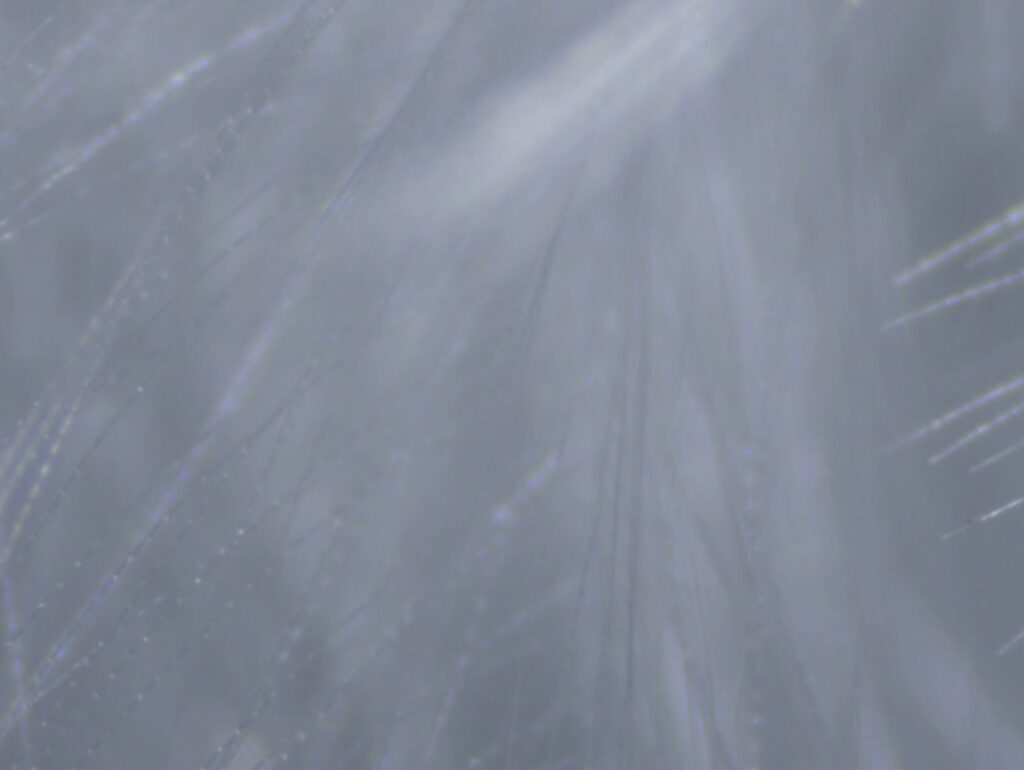
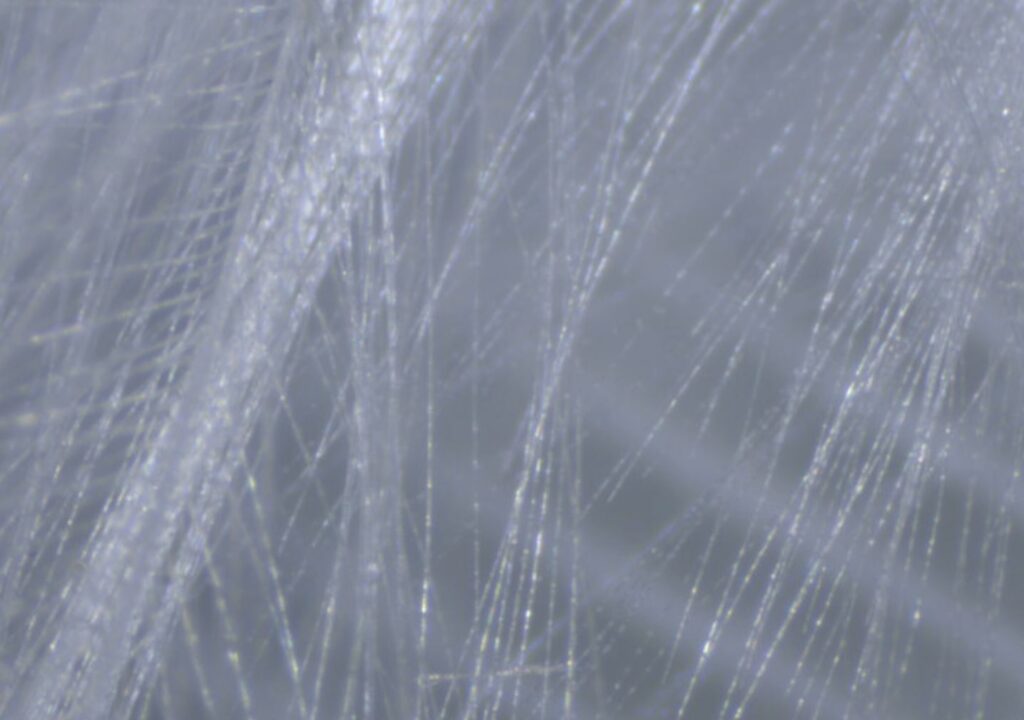
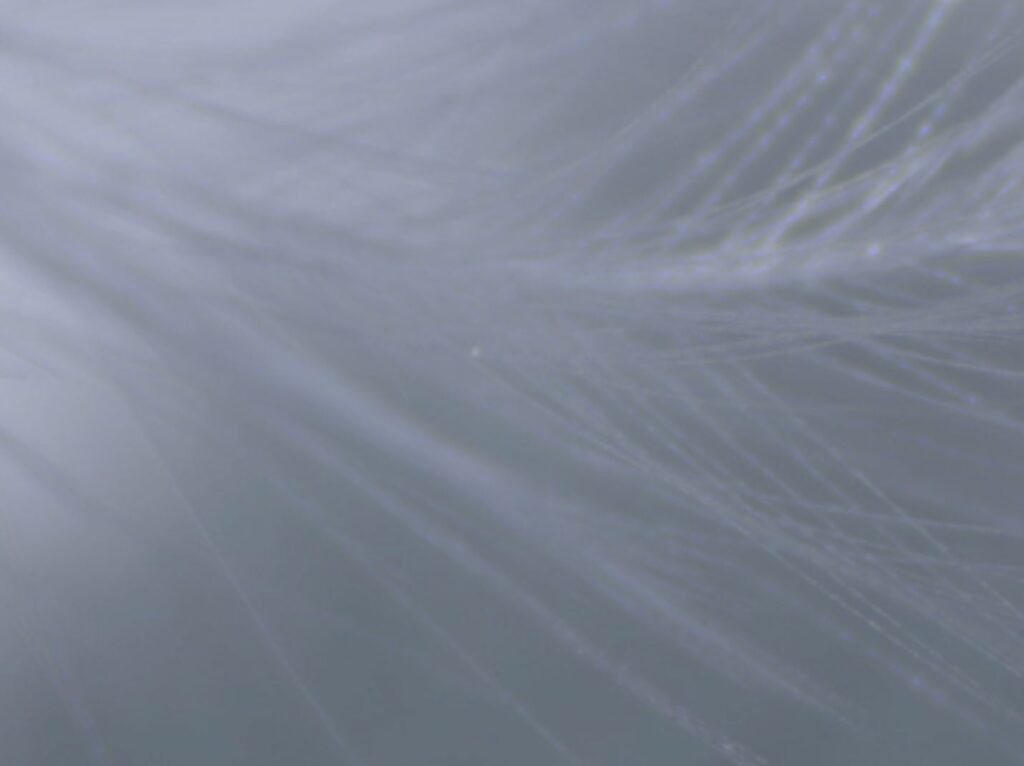
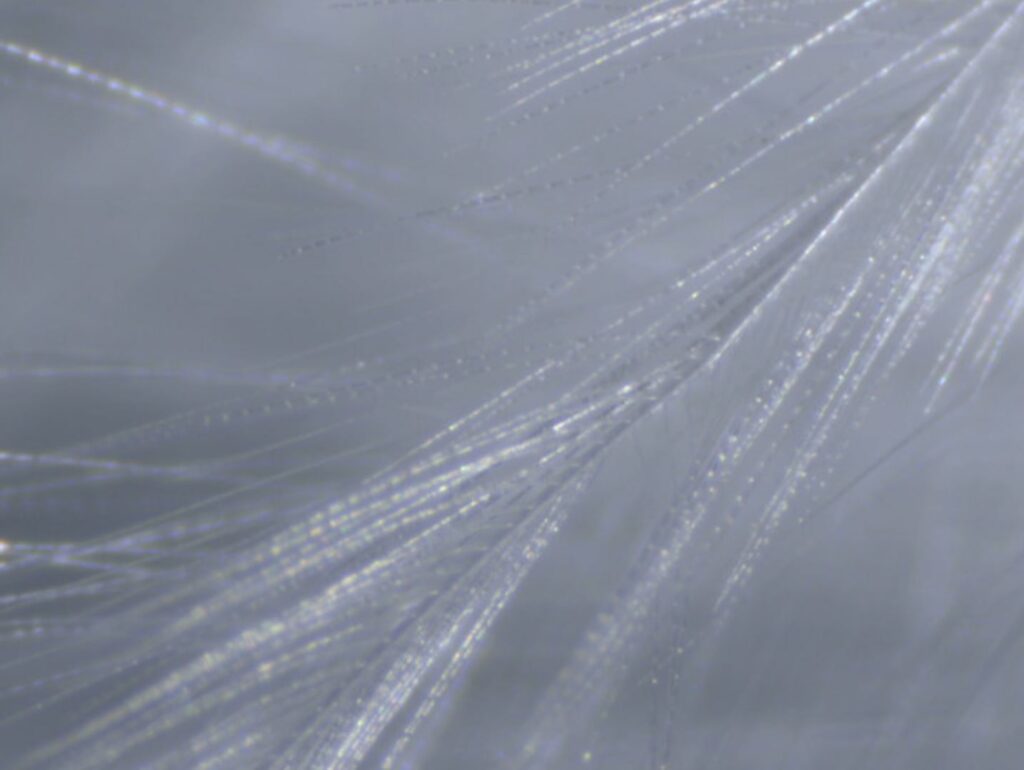
Two opposing mirrors generate an apparently infinite space through recursive reflection. At its center, two objects confront one another: a metallic fragment resembling the wing of a fallen metal falcon and a fragile sculptural form woven from microscopic, high-resolution feather structures. Suspended between technological precision and organic fragility, the two elements enter into an endless dialogue that expands through the mirrored reflections.
Two drone recordings from contemporary warfare are projected in reverse. Beginning with destruction, the moving images travel backwards in time toward the point of departure, retracing the drone’s trajectory before impact.
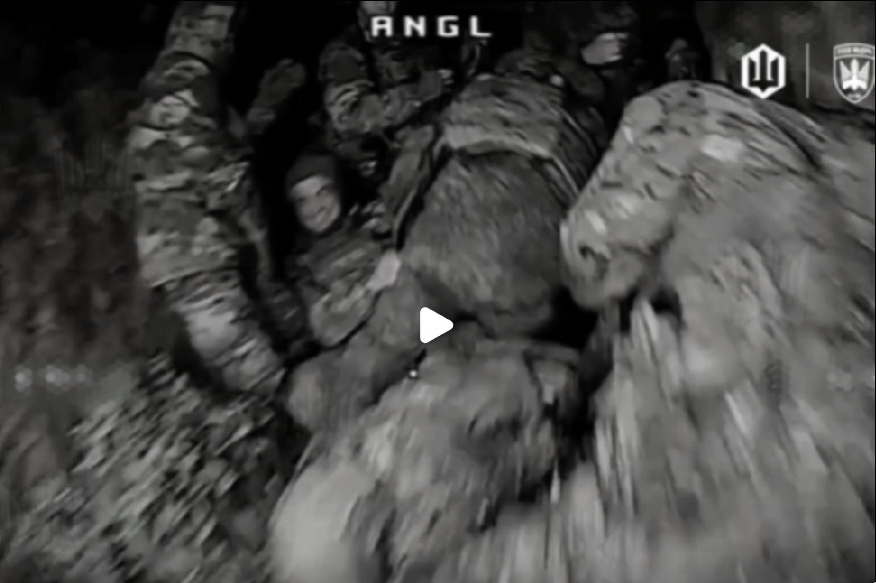
Reverse sequence begins with the final transmitted image of a Ukrainian FPV drone. Recorded on December 26, 2025, at an undisclosed location along the Ukrainian front, the footage depicts a temporary shelter occupied by Russian military personnel in the final instant before impact. The work rewinds the irreversible, tracing the trajectory from destruction back to departure.
The old eagle rises above the clouds, circling for days before finally surrendering to death.
The video sequences begin with the drone’s final transmitted image—the last recorded instant before reaching its destination. From this threshold, time unfolds in reverse, retracing the flight back to its point of origin. As the image dissolves into its beginning, an ephemeral formation of wings slowly unfolds across the installation, symbolically returning the sky to the birds.
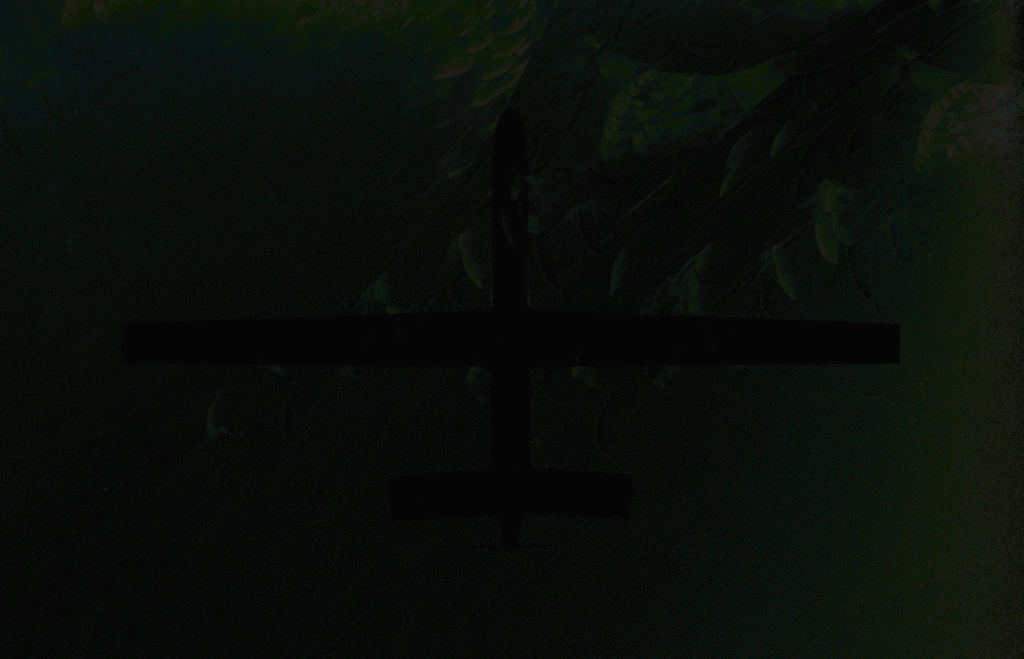
Eagle, Crane, Bald Ibis
The situation is accompanied by a sound composition in which birdsong, sonar pulses, and acoustic traces of movement, velocity, and distance are interwoven. Origami Cranes are gradually incorporate into the installation.
Inspired by the story of Sadako Sasaki and the enduring symbolism of the thousand cranes, this participatory gesture transforms the work into a collective process of remembrance, care, and hope.
Origami-Cranes are suspended around the perimeter of the installation, creating an evolving aerial landscape. As the collective intervention grows, with every further Crane, the situation itself transform the surrounding airspace into a visible expression of shared space and hope.